“Job titles divide us. Skills define us.”
That’s the reality of today’s work culture.
In a world where a barista can become a brand manager and a delivery executive can launch a startup, traditional job labels like blue collar and white collar are starting to blur. And right in the middle of this conversation sits a popular question:
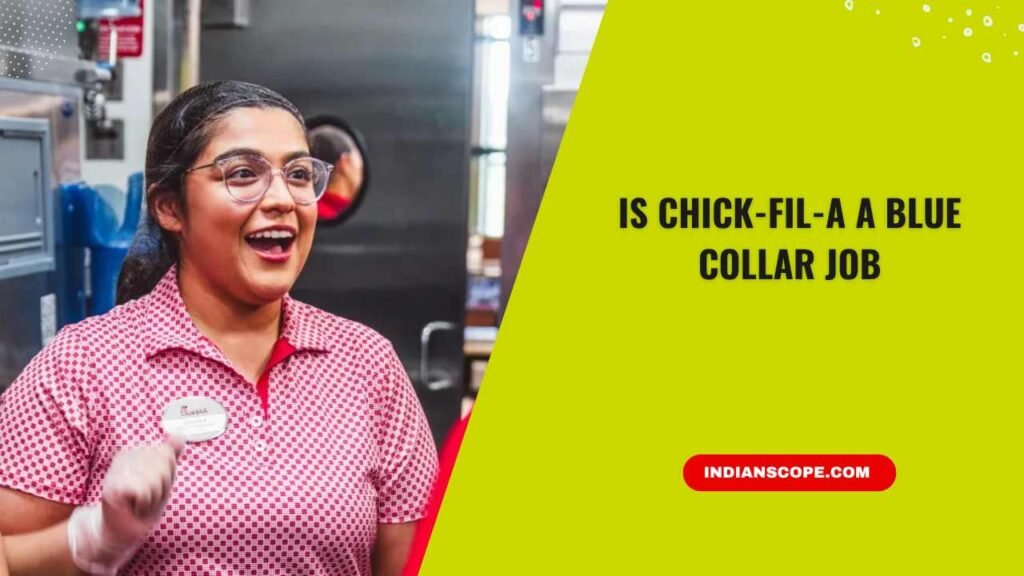
Is working at Chick-fil-A a blue-collar job?
Let’s break it down—clearly, honestly, and without outdated assumptions.
What Does “Blue Collar Job” Really Mean?
Traditionally, blue-collar jobs are associated with:
- Manual, physical labor
- Hourly wages
- Skill-based work (often without needing a formal degree)
Think construction workers, electricians, mechanics—jobs where physical effort is central.
These roles were historically called “blue collar” because workers wore durable blue uniforms to handle physically demanding tasks.
Then What Are White and Grey Collar Jobs?
To understand where Chick-fil-A fits, we need the full picture:
- White-collar jobs: Office-based roles (e.g., managers, analysts)
- Blue-collar jobs: Manual labor-focused roles
- Grey-collar jobs: A blend of both—technical skills + service + some physical work
And here’s where things get interesting…
Also Read: Which Justices Voted Against Tariffs? Understanding the 2026 Supreme Court Decision
What Do Employees Actually Do at Chick-fil-A?
A job at Chick-fil-A isn’t just “serving food.” It includes:
Front-of-House Roles
- Taking orders
- Managing customers
- Handling payments
- Maintaining service quality
Back-of-House Roles
- Cooking and assembling food
- Cleaning and maintaining hygiene
- Managing kitchen operations
Leadership Roles
- Shift management
- Team coordination
- Performance tracking
👉 The work involves both physical activity and people skills—a key clue to its classification.
So, Is Chick-fil-A a Blue Collar Job?
✔️ Why It Can Be Considered Blue Collar
There’s a strong case here:
- Employees are on their feet for hours
- Tasks involve hands-on work (cooking, cleaning, handling orders)
- Most roles are hourly-based
- Entry doesn’t require a formal degree
From this lens, it clearly overlaps with blue-collar characteristics.
❌ Why It Doesn’t Fully Fit the Label
But here’s the twist:
- It’s not heavy manual labor like construction or factory work
- The job heavily depends on customer interaction and soft skills
- The environment is structured, branded, and service-driven
- Employees are trained in communication, teamwork, and efficiency
👉 This goes beyond traditional blue-collar definitions.
Welcome to the Era of “Service Collar” Jobs
Modern roles—especially in fast food—don’t fit neatly into old categories.
Jobs at Chick-fil-A are better described as:
Service-collar or grey-collar jobs
Why?
Because they combine:
- Physical effort
- Customer service
- Process-driven systems
- Soft skill development
This hybrid nature is exactly what defines today’s workforce.
Why Job Labels Are Becoming Outdated
Here’s the truth most people ignore:
The economy has changed faster than our definitions.
Today:
- A fast-food worker learns operations + customer psychology
- A delivery partner understands logistics + time optimization
- A retail associate builds sales and communication expertise
So asking “Is this blue collar?” is becoming less relevant than asking:
👉 “What skills does this job build?”
Does the Label Even Matter?
Let’s be practical.
Working at Chick-fil-A can offer:
Real Benefits
- Strong work discipline
- Customer handling skills
- Team collaboration
- Growth into leadership roles
Many employees move into:
- Shift management
- Store operations
- Franchise ownership paths
👉 That’s not “just a job.” That’s a career foundation.
Also Read: How to Build Credit From Scratch
Pros and Cons of Working at Chick-fil-A
✅ Pros
- Beginner-friendly (great for first jobs)
- Structured training
- Fast-paced skill development
- Positive work culture reputation
❌ Cons
- Physically demanding shifts
- High-pressure during peak hours
- Entry-level pay may be limited
Final Verdict: What Should You Call It?
Is Chick-fil-A a blue-collar job?
👉 Partially—but not entirely.
A more accurate answer:
It’s a service-based, grey-collar role that blends physical work with people skills.
And honestly—that’s where the future of work is heading.
Final Thought
Don’t get stuck in labels.
Because in today’s world,
the smartest workers aren’t choosing “collars”—they’re building skills.
FAQs
Is fast food considered blue collar?
Partly. It includes physical tasks but leans heavily toward service-based work.
Can a Chick-fil-A job turn into a career?
Yes. Many employees grow into leadership and management roles over time.
What skills do you gain working here?
Communication, teamwork, time management, multitasking, and customer handling.
Pingback: I’m 25 And Earning ₹30K A Month—How Should I Start Investing For Long-Term Growth? - Indian Scope