
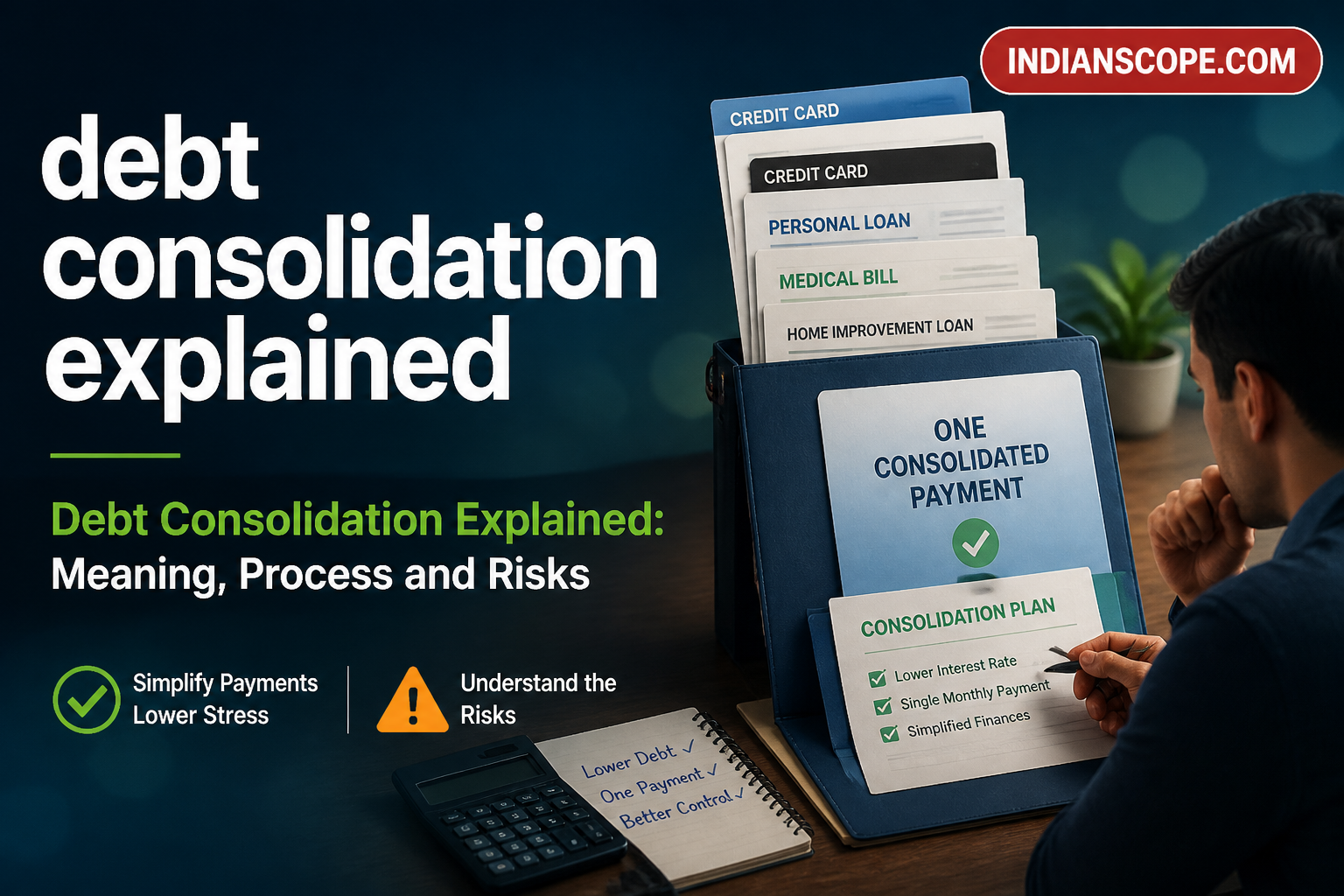
Debt consolidation explained simply is a way to bring several debts together under one repayment arrangement. This may involve taking a new loan to pay off existing balances or organising payments through a debt management plan. The aim is to make repayment easier to track and, in some cases, change the interest rate or payment schedule. Consolidation does not automatically cancel debt or guarantee savings. Its value depends on the new terms, fees, repayment period and whether you can keep up with payments. This guide explains the term, related concepts and checks to make before considering it.
Debt consolidation: the core definition
Debt consolidation means combining or reorganising multiple debts so that they are repaid through one arrangement. The debts might include credit card balances, personal loans or other forms of borrowing, depending on what a lender or plan provider accepts. The arrangement may be a new loan or a debt management plan.
The phrase describes a repayment structure, not debt forgiveness. Existing balances are either paid off using the new loan or handled under an organised plan. You remain responsible for repaying what you owe according to the applicable terms. The US Federal Trade Commission’s guide to getting out of debt describes consolidation as one possible way to manage debt, including through a loan or a payment plan arranged with a credit counselling organisation.
In plain language: several repayment obligations are brought under one arrangement, but the debt itself does not simply disappear.
Debt consolidation loan: a new loan used to repay old debts
A debt consolidation loan is a new loan used to pay off multiple existing debts. After the relevant old balances have been paid, you make repayments on the new loan under its contract. The Consumer Financial Protection Bureau’s explanation of debt consolidation loans notes that the debt is not eliminated; it must still be repaid under the new loan’s terms.
A loan may simplify the number of bills you need to manage. It may also have a different interest rate, payment amount or repayment period from your original debts. Those differences can help or hurt, depending on the full cost and whether the payment schedule is manageable.
For example, a borrower with several balances might use an approved loan to pay them off and then make one monthly payment to the new lender. This is only an illustration: eligibility, loan amount, accepted debt types and disbursement arrangements depend on the product and provider. Confirm that old balances have actually been cleared and check whether any accounts remain open or continue to accrue charges.
Debt management plan: an organised repayment arrangement
A debt management plan (DMP) is an organised way to make payments toward debts. It may be set up with help from a credit counselling organisation. Unlike a consolidation loan, a DMP does not necessarily involve borrowing a new lump sum to pay off existing balances. Instead, the plan coordinates repayment under its own terms.
The exact operation of a plan can vary. Ask which debts are included, who receives the payments, whether creditors have agreed to any changes, what fees apply and what happens if a payment is missed. Do not assume that a plan reduces interest or charges unless the relevant parties have confirmed the change in writing.
A DMP and a consolidation loan can both make repayment easier to organise, but they are not interchangeable. One is an arrangement for organising repayment; the other is a new borrowing product. Compare their terms and responsibilities before deciding which, if either, fits your situation.
How the process generally works
The details differ by provider, but debt consolidation commonly involves these steps:
- List the debts. Record each balance, interest rate, minimum payment, due date and any fees or early repayment conditions. Verify the figures using recent statements.
- Check what can be included. A lender or plan provider may not accept every debt. Ask which balances qualify and how payments will be made.
- Review the proposed arrangement. For a loan, examine the amount, rate, fees, repayment period, instalment and collateral requirements. For a plan, review its payment schedule, charges and conditions.
- Compare the total cost. Look beyond the monthly instalment. A lower payment can result from taking longer to repay, which may increase the total amount paid over time.
- Confirm that payments reach the right accounts. If a new loan is used to clear old debts, check that the proceeds are applied as expected and that the old balances are settled.
- Keep the new repayment on schedule. Continue monitoring statements and payment dates. If old credit accounts remain available, avoid adding new balances that could increase your overall debt burden.
These steps are general checks, not a guarantee of approval or a recommendation to consolidate. The FTC advises consumers to compare terms and costs, since potential savings depend on factors such as interest, fees and repayment time.
Potential advantages—and why they are not guaranteed
A possible advantage is simpler payment management. One payment date or organised plan may be easier to track than several separate bills. This can reduce administrative complexity, though it does not remove the need to budget and pay on time.
Another possible advantage is a lower interest rate or a more suitable payment schedule. If the new arrangement has a lower overall cost and you meet its terms, it may make repayment more manageable. But a lower advertised rate alone does not show that a deal saves money. Fees, the loan term and the amount paid over the full schedule also matter.
A smaller monthly payment may help with cash flow, but it can reflect a longer repayment period rather than a cheaper loan. Likewise, if you continue borrowing on accounts that were paid off, your total debt can rise again. Treat potential benefits as possibilities to test against the written terms, not as promises.
Costs and risks to check
Before agreeing to consolidate, compare the full repayment picture. Important items include:
- Interest rate: Check whether it is fixed or variable, how it is calculated and when it can change.
- Fees: Ask about processing, origination, transfer, plan or other charges. Include applicable costs in the comparison.
- Repayment period: A longer term can reduce each instalment but may increase the total cost.
- Total amount repaid: Compare what you would pay under the current debts with the full cost of the proposed arrangement, including fees.
- Collateral: Find out whether an asset, such as a home or vehicle, secures the borrowing. If collateral is involved, understand the consequences of failing to repay.
- Missed-payment terms: Check late charges, default consequences and whether the provider can change the agreement.
- Old accounts and balances: Confirm how existing debts will be settled. Do not assume an account is closed just because it was paid off.
A debt consolidation loan can add risk if its costs are higher, its term is unsuitable or repayment becomes unaffordable. Secured borrowing deserves particular care because an asset may be at risk under the contract if you do not meet your obligations. Read the agreement and seek qualified advice if a term is unclear.
Debt consolidation vs. debt settlement
Debt settlement is different from consolidation. Settlement seeks an agreement to resolve a debt for less than the full balance. Whether a creditor agrees, and what consequences may follow, depends on the circumstances and applicable rules. Consolidation, by contrast, combines or reorganises repayment and does not automatically reduce the principal owed.
| Approach | What it does | Does it automatically reduce the principal owed? |
|---|---|---|
| Debt consolidation | Combines or reorganises repayment of multiple debts, often through one loan or plan | No |
| Debt settlement | Seeks an agreement to resolve a debt for less than the full balance | No; an amount may be reduced only if an agreement is reached |
The distinction matters because the terms, process and possible consequences are different. Do not treat an offer of settlement as a consolidation loan or assume that a consolidation provider will negotiate away part of a balance.
Jurisdiction note: check local rules
Loan terms, consumer protections, credit reporting and tax treatment can vary by country and product. The sources linked in this guide are US consumer-information sources; they do not establish the rules that apply in India. Check India-specific legal, tax, credit-reporting and product details independently with current local sources and, where needed, a qualified professional.
For any offer, use the written agreement and disclosures as the primary reference for the actual rate, fees, repayment schedule, collateral and default terms. Avoid relying on a general online definition to answer questions about an individual contract.
Conclusion
Debt consolidation explained simply means putting multiple debts into one repayment arrangement, often through a new loan or an organised debt management plan. It can make payments easier to track and may change the rate or schedule, but it does not erase what is owed or guarantee savings. Compare fees, interest, the full repayment period, total cost and any collateral before agreeing. Because product terms and consumer rules vary by jurisdiction, borrowers in India should verify local details rather than assume that guidance from another country applies.
Frequently asked questions
Does debt consolidation erase debt?
No. Consolidation reorganises repayment. You remain responsible for the debt under the new loan or plan terms.
Is a debt consolidation loan the same as a debt management plan?
No. A consolidation loan is new borrowing used to pay existing debts. A debt management plan organises payments under a plan and does not necessarily involve a new loan.
Can debt consolidation lower interest?
It may, but there is no guarantee. Compare the rate, fees, repayment term and total amount payable. A lower monthly payment alone does not prove the arrangement costs less.
What is the difference between consolidation and settlement?
Consolidation combines or reorganises repayment and does not automatically reduce the balance. Settlement seeks an agreement to resolve a debt for less than the full amount; a reduction occurs only if an agreement is reached.
What should I compare before consolidating?
Check the interest rate, all fees, repayment term, total amount repaid, missed-payment conditions and whether an asset is used as collateral. Confirm which existing debts will be paid or included.
Is debt consolidation in India governed by the same rules as in the US?
Not necessarily. India-specific legal, tax, credit-reporting or product rules are not verified here. Check current Indian sources and the relevant lender or plan documents for local details.