What Happened in Venezuela Today? Today, Venezuela once again made global headlines after fresh political unrest and security tensions erupted in major cities, especially in Caracas. Reports throughout the day showed:
- Heavy deployment of security forces near government buildings
- Public protests and clashes between demonstrators and police
- Temporary restrictions on movement and media access
- Strong statements from the government calling the situation a matter of “national security.”
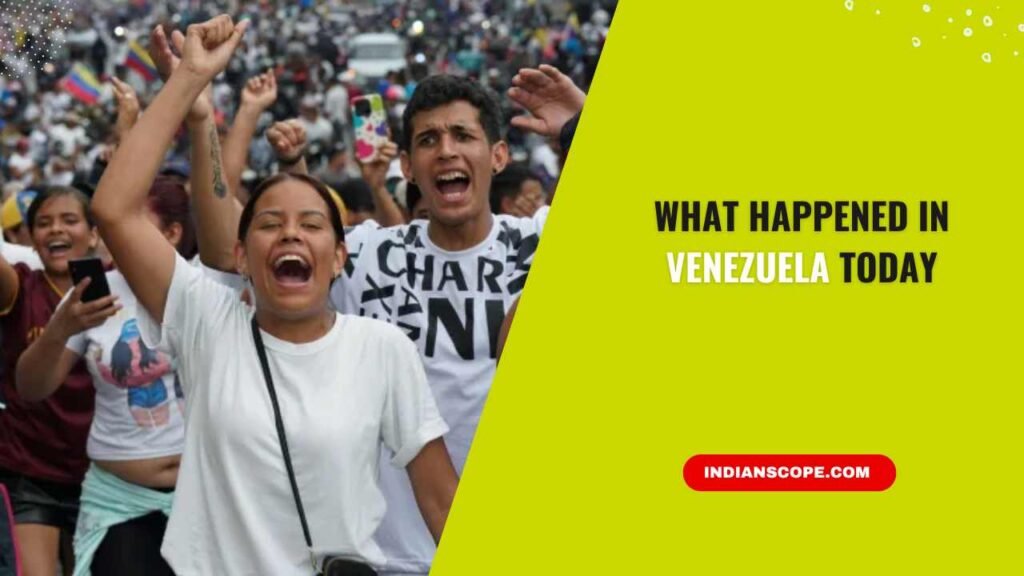
While Venezuela has faced instability for years, today’s events felt different because they came at a time when the country is already under intense economic pressure, international scrutiny, and diplomatic strain. For many observers, this wasn’t just another protest — it looked like another turning point in a long-running national crisis.
But to understand why today matters so much, we need to look beyond the headlines.
The Bigger Picture: What Is Really Happening in Venezuela?
Venezuela is often described through headlines that focus on protests, inflation, or migration. However, these fragments rarely explain the full story. To understand what is really happening in Venezuela, one must look beyond isolated events and examine the deeper political, economic, social, and geopolitical forces shaping the country today.
This is not a sudden collapse. It is the result of years of structural weaknesses, compounded by governance failures and international pressures. The crisis affects not only Venezuelans but also neighboring countries and global politics.
Political Crisis: Power, Legitimacy, and Control
At the heart of Venezuela’s turmoil lies a prolonged political crisis centered on power and legitimacy.
The country has been ruled for years by Nicolás Maduro, whose government has been widely criticized for authoritarian practices, weakened democratic institutions, and suppression of dissent. Elections held under his leadership have been questioned by both domestic opposition and international observers, creating a deep trust deficit between the state and its citizens.
Political institutions such as the judiciary, electoral bodies, and legislature are widely perceived as aligned with the ruling elite. This concentration of power has limited checks and balances, making political reform extremely difficult from within the system.
As a result, Venezuela is not facing a normal political disagreement—it is facing a crisis of governance, where large segments of the population no longer believe that political change is possible through democratic means.
Why this matters:
Without legitimate and trusted institutions, economic recovery, social stability, and international cooperation become nearly impossible.
Also Read: Why Do People Hate Jews?Understanding the Roots of Antisemitism
Economic Collapse: How a Resource-Rich Nation Fell Apart
Venezuela holds some of the world’s largest oil reserves, yet its economy has suffered one of the worst collapses in modern history.
Overdependence on Oil
For decades, Venezuela relied almost entirely on oil exports. Instead of diversifying the economy, successive governments used oil revenues to fund subsidies and political programs without building sustainable industries. When oil prices fell and production declined, the economy had no safety net.
Mismanagement and Corruption
The state-controlled oil sector suffered from poor management, underinvestment, and corruption. Skilled professionals left the industry, infrastructure deteriorated, and production dropped sharply. At the same time, excessive government spending and money printing led to hyperinflation, wiping out savings and wages.
Everyday Economic Reality
Today, many Venezuelans earn wages that cannot cover basic necessities. While some limited economic activity has returned in urban areas using foreign currencies, the majority of the population remains excluded from meaningful recovery.
The bigger issue:
This is not just an economic downturn—it is a structural breakdown that cannot be fixed by short-term policy changes alone.
Humanitarian Crisis: Life Inside Venezuela
Behind statistics and economic indicators lies a severe humanitarian crisis.
Food and Healthcare Shortages
Millions of Venezuelans struggle with food insecurity. Hospitals often lack essential medicines, equipment, and even electricity. Chronic illnesses that are easily treatable elsewhere can become life-threatening.
Mass Migration
Facing hardship and limited opportunities, millions have left the country, creating one of the largest migration crises in the world outside of war zones. Families are split across borders, and many migrants face exploitation, unstable work, and legal uncertainty in host countries.
Social Impact
The crisis has reshaped Venezuelan society. Communities rely heavily on remittances from relatives abroad. Education has suffered due to underfunded schools and teacher shortages, threatening long-term human capital.
Why this matters:
Even if political and economic reforms begin tomorrow, rebuilding human well-being will take years.
International Pressure and Geopolitics
Venezuela’s crisis cannot be separated from global politics.
The country has become a focal point of geopolitical rivalry, particularly involving the United States, China, Russia, and regional allies.
Sanctions imposed by Western nations were intended to pressure political reform but have also contributed to economic isolation. Meanwhile, alliances with non-Western powers have provided limited financial and diplomatic support, but not enough to stabilize the economy.
This tug-of-war has left Venezuela caught between competing global interests, often prioritizing strategic advantage over humanitarian outcomes.
Also Read: What is in the East Wing of the White House?
Why Venezuela’s Crisis Matters Beyond Its Borders
Venezuela is not an isolated case.
Regional Stability
Neighboring countries face pressure from migration flows, labor market disruptions, and social integration challenges. This affects regional stability across Latin America.
Global Lessons
Venezuela serves as a warning about:
- Overreliance on a single natural resource
- Weak institutions and a lack of accountability
- The long-term costs of politicizing economic policy
These lessons are relevant to many developing and resource-dependent nations.
Is There a Way Forward?
There is no simple solution, but meaningful progress would require:
- Restoration of credible democratic institutions
- Economic reforms focused on diversification and transparency
- Gradual reintegration into global financial systems
- Humanitarian support is insulated from political manipulation
Most importantly, any solution must prioritize the Venezuelan population, not ideological or geopolitical interests.
Conclusion: Understanding the Bigger Picture
What is really happening in Venezuela is not just a crisis—it is a systemic breakdown involving politics, economics, society, and international power dynamics. Simplistic explanations miss the depth of the problem.
For Venezuela to recover, change must be structural, inclusive, and sustained over time. Until then, the country remains a powerful reminder that natural wealth alone does not guarantee prosperity—and that rebuilding a nation requires more than resources; it requires trust, institutions, and human dignity.
Pingback: Which Justices Voted Against Tariffs? Understanding The 2026 Supreme Court Decision - Indian Scope