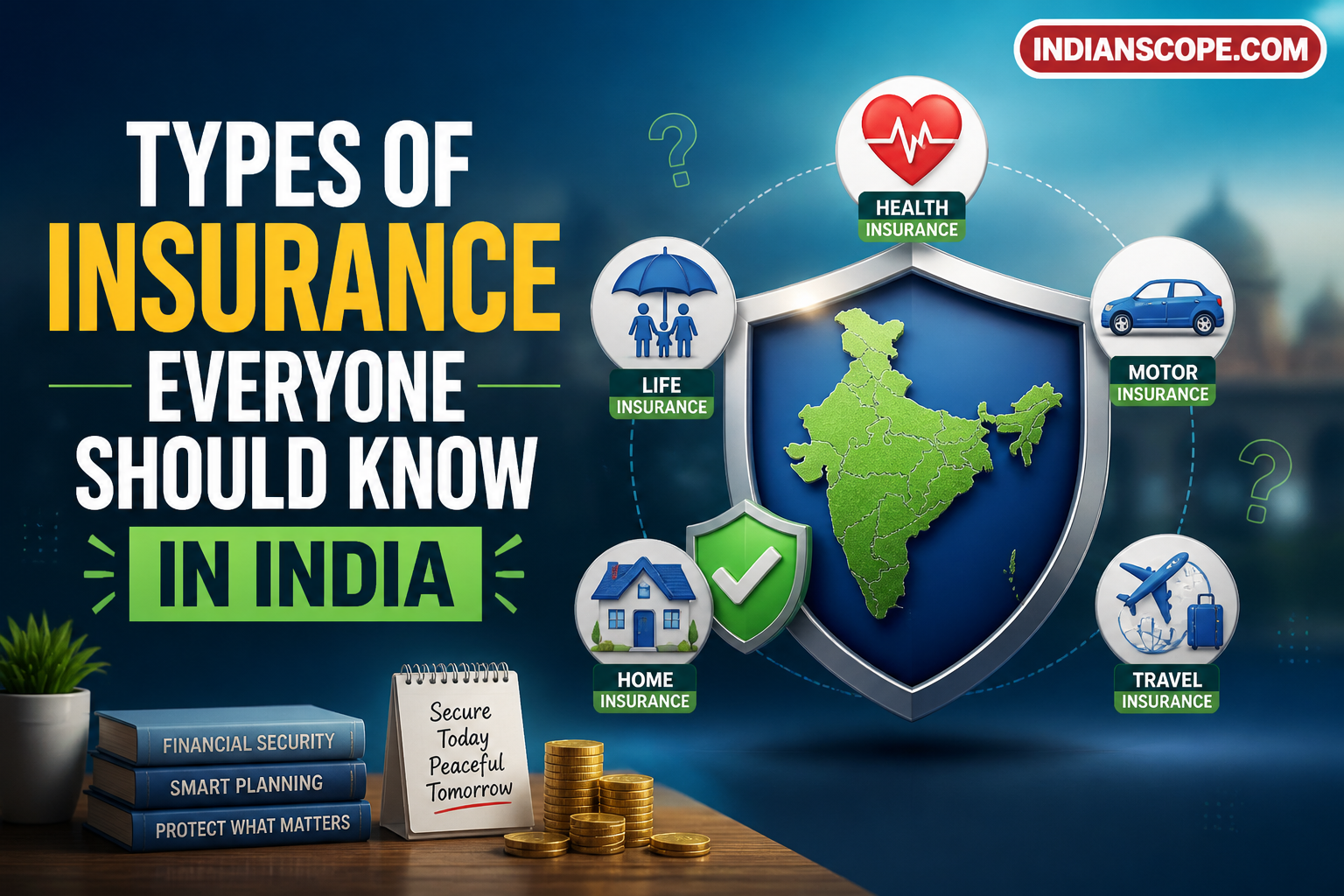
The types of insurance everyone should know can help protect against different financial risks, from eligible medical expenses to specified damage to a vehicle or property. In exchange for a premium, an insurer provides the cover described in a policy, subject to its terms, limits, exclusions and claim conditions. The right mix depends on your circumstances: vehicle owners, people supporting dependants and overseas travellers may have different priorities. This guide explains six common types of insurance in India, what they are designed to cover and what to review before buying. It is an educational overview, not a recommendation for a particular policy.
At a glance: common types of insurance
| Type | Main purpose | Who might consider it |
|---|---|---|
| Life | Pays a defined benefit for an event covered by the policy, commonly the insured person’s death | People whose dependants or financial obligations could be affected by their death |
| Health | Covers specified healthcare costs or provides defined health-related benefits | Anyone seeking protection against eligible medical expenses |
| Motor | Covers specified vehicle-related liability and, if selected, damage to the insured vehicle | People who own or use a motor vehicle |
| Home or property | Covers specified loss or damage to insured property | Homeowners, landlords or others with property they want to protect |
| Personal accident | Provides defined benefits for qualifying accidental injury, disability or death | People seeking cover for specified accident-related outcomes |
| Travel | Covers specified risks during a trip | People seeking protection against eligible travel-related risks |
These are broad categories, not promises of payment. Policy wording sets out what is covered and under what conditions. The IRDAI policyholder portal is a general starting point for consumer information on life, health and general insurance.
1. Life insurance: financial support for beneficiaries
Life insurance provides a specified benefit when an event covered by the contract occurs. People often consider it when their income supports a spouse, children, parents or another dependant. A benefit paid after a covered death may help beneficiaries manage ongoing expenses or financial commitments, depending on the policy and the amount of cover selected.
Life insurance is not the same as health insurance. Life cover addresses a defined event, commonly the insured person’s death, and can provide a benefit to beneficiaries. Health insurance relates to eligible healthcare expenses or defined health-related benefits. The two address different financial needs and should not be treated as substitutes for one another.
Check the benefit, policy duration, premium-payment conditions, exclusions and other policy-specific terms. Do not assume every life policy provides the same protection or that an advertised benefit applies in every situation. The IRDAI consumer information portal provides general information; the specific policy document remains essential for understanding a product’s terms.
2. Health insurance: eligible medical expenses
Health insurance covers specified healthcare costs or provides defined health-related benefits under the policy. It can help with eligible expenses when covered treatment is needed, but it does not necessarily pay every bill. Policy wording determines the scope of cover, limits, exclusions and other conditions, so review those details before comparing premiums.
When evaluating a policy, look closely at covered expenses and treatments, the sum insured, sub-limits, deductibles or co-payments, waiting periods and the claim process. Check how the policy treats pre-existing conditions and whether its hospital or provider arrangements suit your needs. Features differ among products, so do not assume a benefit is included simply because it appears in a sales summary.
Health insurance may be relevant whether or not you have cover through an employer. If employer cover exists, understand its limits and conditions and consider how your needs could change if it ends. The IRDAI policyholder portal offers general consumer information, while the policy wording explains the exact cover. For a related guide, see best family health insurance plans in India; compare any product information with current policy documents before making a decision.
3. Motor insurance: liability and vehicle damage
Motor insurance relates to risks associated with owning or using a vehicle. In India, the Motor Vehicles Act requires a vehicle used in a public place to have insurance against third-party risks, subject to the Act’s provisions. The Motor Vehicles Act, 1988 is the primary legal reference for that requirement.
Third-party cover addresses specified legal liability to other people; it is not the same as cover for damage to your own vehicle. Own-damage cover, when selected and included in the policy, can cover specified damage to the insured vehicle. The precise protection, exclusions and conditions depend on the contract. Check what the policy treats as an insured event, what it excludes and what steps are required after an incident.
Confirm that your vehicle cover is current and appropriate to how the vehicle is used. Before renewing or buying, compare liability protection, own-damage terms if applicable, deductibles, limits, exclusions and claim requirements. Read the schedule and wording for the specific policy rather than relying on the product label alone.
4. Home or property insurance: protecting an asset
Home or property insurance can cover specified loss or damage to insured property. Depending on the policy, the insured property may be a home or another eligible asset, and only the risks included in the contract are covered. Do not assume every kind of damage, every item inside a home or every cause of loss is automatically protected.
This cover may be worth considering if repairing or replacing a home or property after a covered event would be difficult to fund. Identify what you want insured and check whether the policy covers the structure, contents or both. Review exclusions, limits, deductibles, valuation terms and claim documentation requirements. The policy schedule should make clear which property and risks are insured.
Home or property insurance is situation-dependent, not a universal requirement. A renter, for instance, may have different priorities from a homeowner. Consider the value of the property at risk, any existing protection and how much loss you could manage yourself before choosing cover.
5. Personal accident insurance: defined accident-related benefits
Personal accident insurance provides specified benefits for qualifying accidental injury, disability or death, depending on the policy. It focuses on defined outcomes associated with an accident. Do not assume it covers illness or every injury, or that it automatically replaces health or life insurance.
You may consider this cover if you want a defined benefit for particular accident-related outcomes. Before buying, check how the policy defines an accident and qualifying injury, which benefits apply, the limits and exclusions, and what medical or other evidence is required for a claim. Compare it with any life or health cover you already have to understand possible overlaps and gaps.
6. Travel insurance: cover for specified trip risks
Travel insurance can cover specified risks during a trip. Depending on the plan, this may include eligible medical emergencies or travel disruptions, but no single list applies to every policy. Destination, trip length, activities and policy exclusions can all affect whether a particular loss qualifies.
Read the policy before departure rather than relying on a short product summary. Check the geographical scope, eligible medical expenses, limits, exclusions, emergency contact process and claim documentation. If you are travelling with expensive belongings or planning activities that may have special conditions, confirm whether those risks are covered. Travel insurance is most relevant when the risks and potential costs of a trip justify protection; it is not automatically necessary for every journey.
How to choose cover that fits your situation
Start with the financial risks that would be difficult for you or your household to absorb. Consider who relies on your income, what healthcare costs you could manage, whether you own or use a vehicle, what property you want to protect and whether you have upcoming travel. List any cover you already have through an employer, another policy or another arrangement, and check its limits and conditions. This can help you avoid treating every insurance product as equally urgent.
Compare policies using their wording, not just their premiums. Check:
- Covered risks: What events, expenses, people or property are included?
- Exclusions and conditions: When can a claim be declined or restricted?
- Limits and deductibles: What is the maximum benefit, and what might you need to pay yourself?
- Co-payments and waiting periods: Do these affect when or how much the insurer pays?
- Claim requirements: What documents, notifications or time limits apply?
- Fit with existing cover: Does the policy address a gap or duplicate protection you already have?
A lower premium may come with different limits, exclusions or cost-sharing conditions, so compare like with like. If a term is unclear, ask the insurer or an appropriately qualified adviser to explain it, and keep the relevant policy documents accessible. Revisit your choices when your income, dependants, assets or travel plans change.
Conclusion
The main types of insurance everyone should know address different risks: life, health, motor, property, personal accident and travel cover are not interchangeable. Some may be especially relevant because of a legal requirement or your circumstances; others are optional and situation-dependent. There is no single package that everyone needs. Identify the losses you could not comfortably bear, account for existing protection, and compare policy wording, exclusions, limits and claim conditions before choosing. Reviewing the contract carefully is more useful than relying on a product name or a broad promise of protection.
Frequently asked questions
What are the main types of insurance everyone should know?
Six common categories are life, health, motor, home or property, personal accident and travel insurance. Each addresses different specified risks, and policy terms determine the actual cover.
Are life insurance and health insurance the same?
No. Life insurance provides a defined benefit for a covered event, commonly the insured person’s death. Health insurance concerns specified healthcare costs or defined health-related benefits, subject to its terms.
Is motor insurance mandatory in India?
The Motor Vehicles Act requires a vehicle used in a public place to have insurance against third-party risks, subject to the Act’s provisions. Check the Act and current requirements for your circumstances.
Does motor insurance cover damage to my own vehicle?
Third-party liability cover and own-damage cover are different. Cover for damage to the insured vehicle applies only when included and is subject to the policy’s terms, limits and exclusions.
Does home insurance cover every kind of damage?
No. Home or property insurance covers specified losses or damage as defined by the policy. Check the insured property, covered risks, limits, exclusions, deductibles and claim requirements.
How should I compare insurance policies?
Compare covered risks, exclusions, limits, deductibles or co-payments, waiting periods and claim requirements. Also consider existing protection and whether the policy addresses a financial risk you could not comfortably bear.